
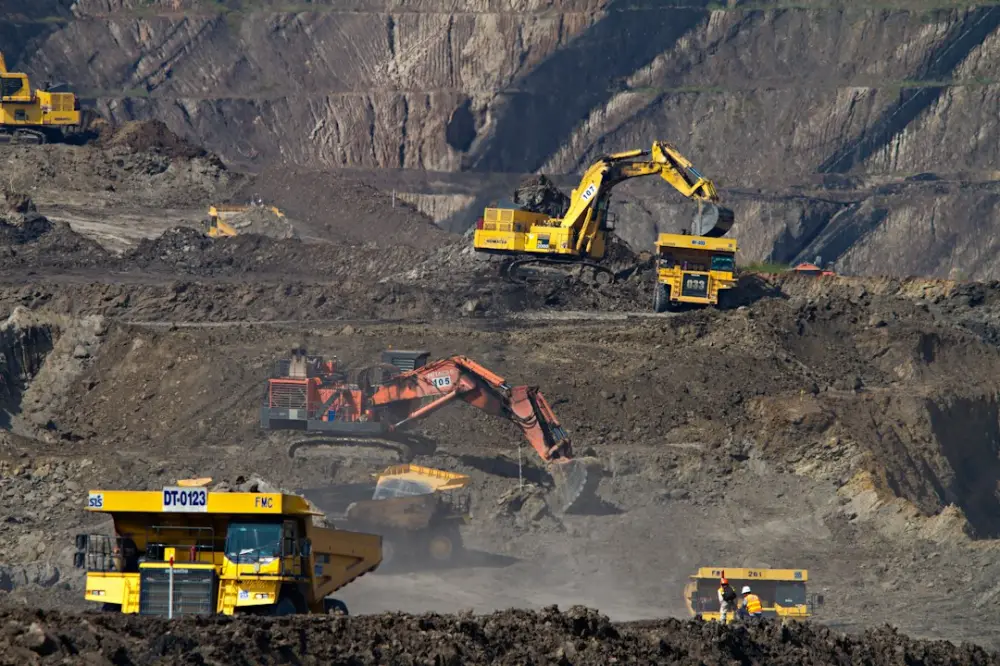
Copper mining economics is the financial and operational framework governing the extraction and processing of copper ore. It encompasses production costs—such as labor, energy, and equipment—versus market prices driven by global demand. Understanding these economics helps investors evaluate the profitability and long-term viability of mining projects in a resource-constrained world.
For those analyzing the sector in 2026, the focus has shifted from simple volume to the efficiency of extraction. A project’s success is no longer just about how much metal is in the ground, but the cost required to bring it to a refinery. This involves calculating the margin between the London Metal Exchange (LME) price and the site-specific operating expenses.
To understand the basics, one must look at the life cycle of a mine. It begins with exploration and feasibility studies, moving into multi-year construction phases before the first ton of ore is processed. In a practical sense, a mine located in a remote mountain range faces vastly different economic hurdles than one near a coastal port, even if their ore grades are identical. Logistics, power access, and water availability are the silent architects of a mine's balance sheet.
First steps for assessing copper production costs
- Start by identifying the C1 cash costs of a specific mining project to establish a baseline for its operational efficiency against the current LME price.
- The first step in evaluating geological risk is to check the reported ore grades and compare them against historical averages to detect signs of grade depletion.
- To begin a logistical analysis, map the transport route from the mine site to the nearest refinery or port to estimate the impact of energy prices on moving concentrate.
- Follow this by examining the project's power purchase agreements to determine if the operation is shielded from volatile diesel or electricity markets.
- Finally, review the local regulatory framework and royalty structures to account for non-operational costs that could affect the long-term C3 total production costs.
Why Copper is Essential for Infrastructure
Copper remains the primary conductor for the global electrical grid due to its high thermal and electrical conductivity. In 2026, this utility is most visible in the expansion of renewable energy systems and the charging infrastructure required for electric transportation. A single offshore wind turbine can require several tons of copper to connect its generator to the mainland power station.
Beyond high-tech applications, the metal is the bedrock of traditional construction. Residential plumbing, heating systems, and architectural cladding rely on its durability and antimicrobial properties. When evaluating copper demand information and market trends, it becomes clear that urban migration in emerging economies continues to put upward pressure on supply, as new housing developments require extensive wiring and piping.
The transition to a low-carbon economy has fundamentally changed the demand profile. While traditional industrial use remains steady, the "green" sector—including solar arrays and grid-scale battery storage—now accounts for a significant and growing portion of annual consumption. This dual-track demand makes copper a unique bellwether for both traditional industrial health and the progress of the energy transition.
Factors Determining Copper Production Costs
Production costs in copper mining are generally categorized into C1, C2, and C3 costs. C1, or cash costs, include the direct expenses of mining, milling, and smelting. In 2026, energy consumption is the most volatile variable in this equation. Open-pit mines using massive haul trucks, such as those found in the Atacama Desert, are highly sensitive to the price of diesel or the cost of transitioning to electric fleet alternatives.
Labor and reagents also play a critical role. Processing copper often involves froth flotation or solvent extraction-electrowinning (SX-EW). These processes require specific chemicals and a skilled workforce to manage complex chemical balances. For example, a mine in a high-altitude region of Peru may face higher labor costs due to the specialized health and safety requirements for workers operating in thin air, alongside the logistical cost of transporting supplies to the site.
Ore grade is perhaps the most significant geological factor. As high-grade deposits become rarer, miners are forced to process more rock to get the same amount of metal. This "grade depletion" means that more energy and water are used per pound of copper produced. To combat this, many modern sites are implementing autonomous drilling and AI-driven sorting technologies to reduce waste and lower the per-unit cost of production.
Supply, Demand, and Price Drivers
The global copper price is a function of immediate inventory levels and long-term supply projections. When warehouse stocks at the LME or the Shanghai Futures Exchange (SHFE) drop, prices typically spike. However, the lead time to bring a new mine online is often ten to fifteen years, creating a structural lag that contributes to the growing supply deficit in the global market.
Geopolitical stability in major producing nations like Chile, Peru, and the Democratic Republic of the Congo (DRC) is a constant driver of price volatility. Any disruption—whether from labor strikes, tax law changes, or local community disputes—can immediately remove thousands of tons from the global supply chain. In 2026, investors pay close attention to "resource nationalism," where governments seek a larger share of mining profits through increased royalties or mandatory state participation.
On the demand side, China remains the largest consumer, but the diversification of manufacturing hubs into Southeast Asia and India is shifting the map. Additionally, the rise of copper recycling, or "secondary production," provides a buffer. While scrap copper cannot meet the entirety of global demand, it is an essential component of the circular economy, often requiring significantly less energy to process than virgin ore from a mine.
Long-Term Copper Investment Strategies
Investing in copper requires a distinction between short-term price speculation and long-term exposure to the electrification theme. For many, the most direct route is through equities—buying shares in mining companies. These are often divided into "majors" (large, diversified producers) and "juniors" (smaller companies focused on exploration or developing a single asset). Junior miners carry higher risk but offer significant upside if they successfully prove a resource or become an acquisition target.
Jurisdictional risk is a primary filter for long-term strategy. A project located in a stable mining jurisdiction with a clear legal framework is often valued more highly than a higher-grade deposit in a volatile region. Investors in 2026 are increasingly looking at ESG (Environmental, Social, and Governance) metrics. A mine that uses desalinated water and renewable energy for its operations is less likely to face regulatory shutdowns or community opposition, making it a more resilient long-term asset.
Exchange-Traded Funds (ETFs) provide another layer of strategy, allowing for exposure to a basket of mining stocks or the physical metal itself. This minimizes the risk of a single operational failure at one specific mine. Regardless of the vehicle, a successful strategy involves monitoring the global project pipeline to see which new mines are actually reaching the construction phase and which are being delayed by permitting or financing hurdles.
Future Outlook: Meeting Global Copper Demand
The path forward for the copper industry involves a difficult balance between increasing output and maintaining responsible mining standards. As the world demands more metal for 2027 and beyond, the industry must innovate to unlock "stranded" deposits—those that are currently too low-grade or too deep to be mined profitably. Technologies like in-situ leaching, which extracts metal without moving massive amounts of earth, are currently being tested as potential solutions.
Responsible sourcing is no longer an optional add-on; it is a core economic requirement. Smelters and end-users, such as automotive manufacturers, are increasingly demanding "traceable" copper that can be proven to have been mined with minimal environmental impact and fair labor practices. This shift is creating a tiered market where responsibly produced copper may eventually command a price premium over metal with a higher carbon footprint.
At Candente Copper, we focus on the intersection of these economic realities and the necessity of responsible development. Understanding the metal behind the wire is essential for anyone looking to navigate the transition to a more electrified world. By focusing on the fundamentals of supply, the nuances of production costs, and the importance of ethical stewardship, we can better anticipate the shifts in the copper market throughout 2026 and the decade to follow.